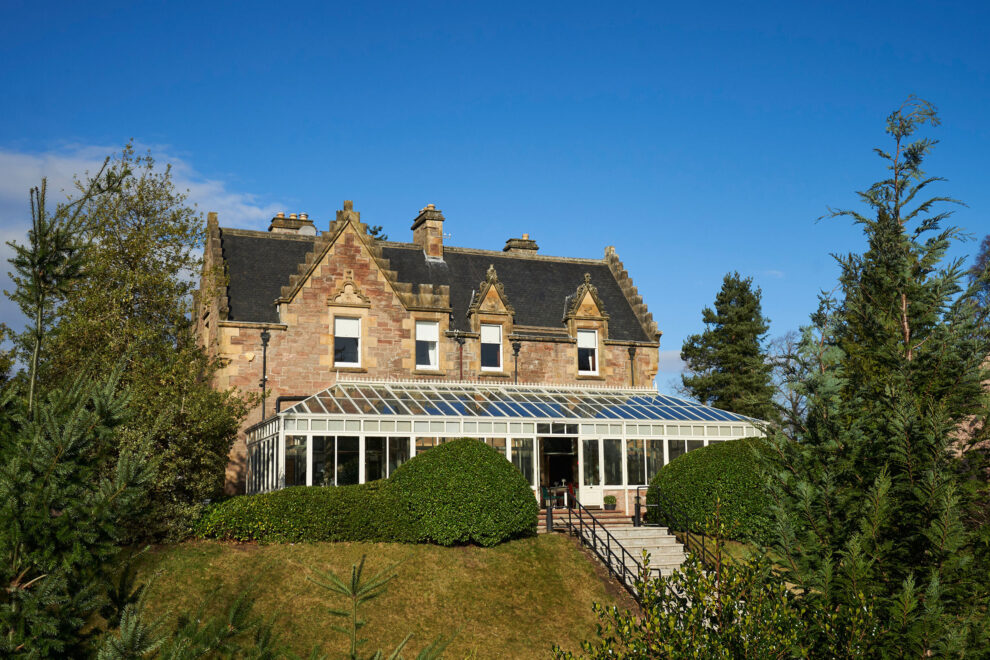
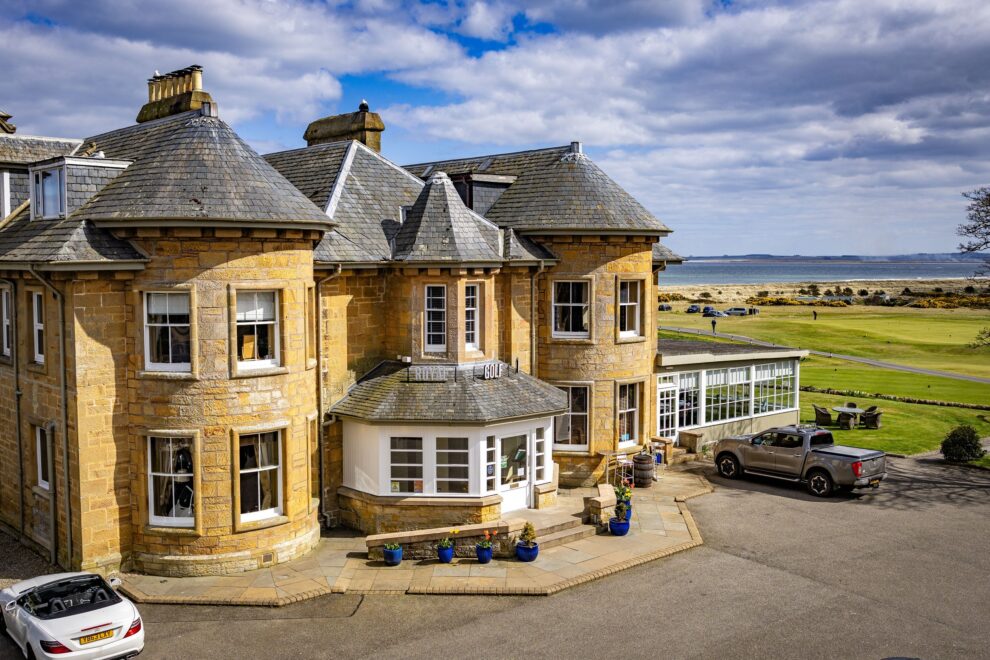
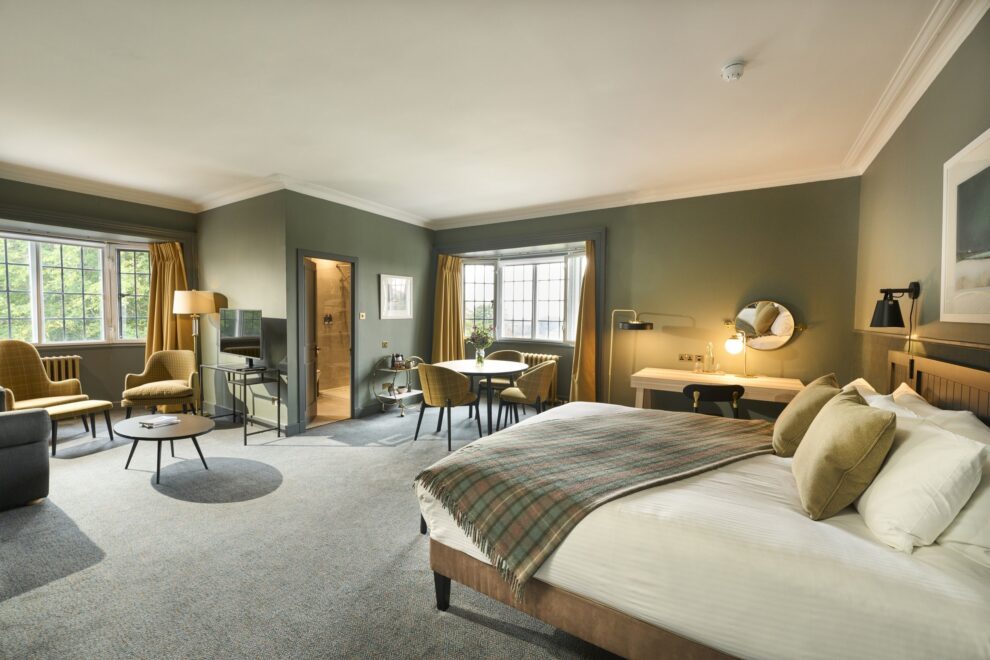
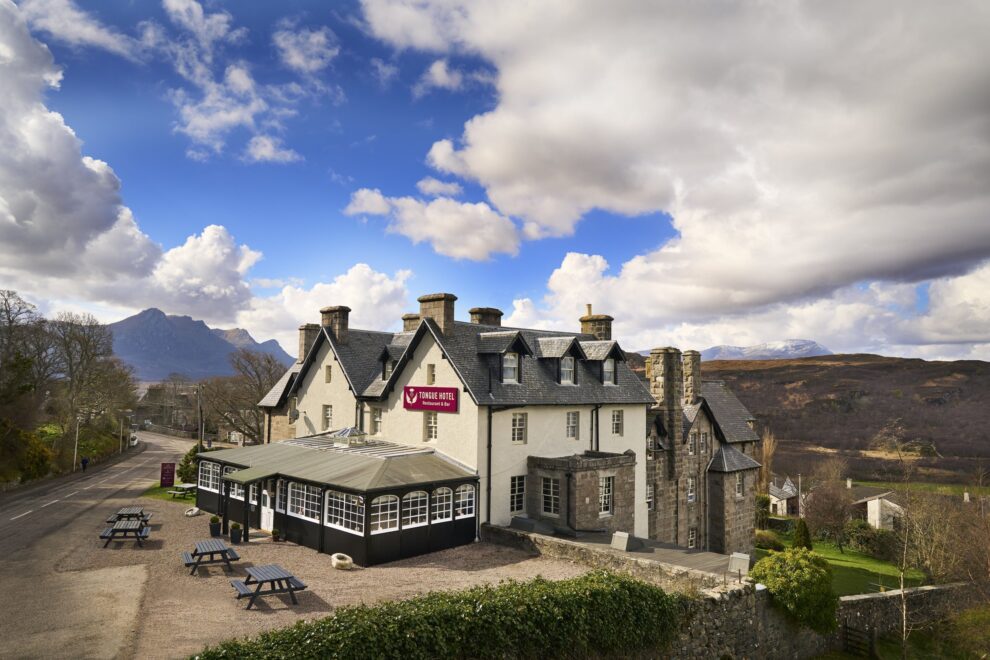
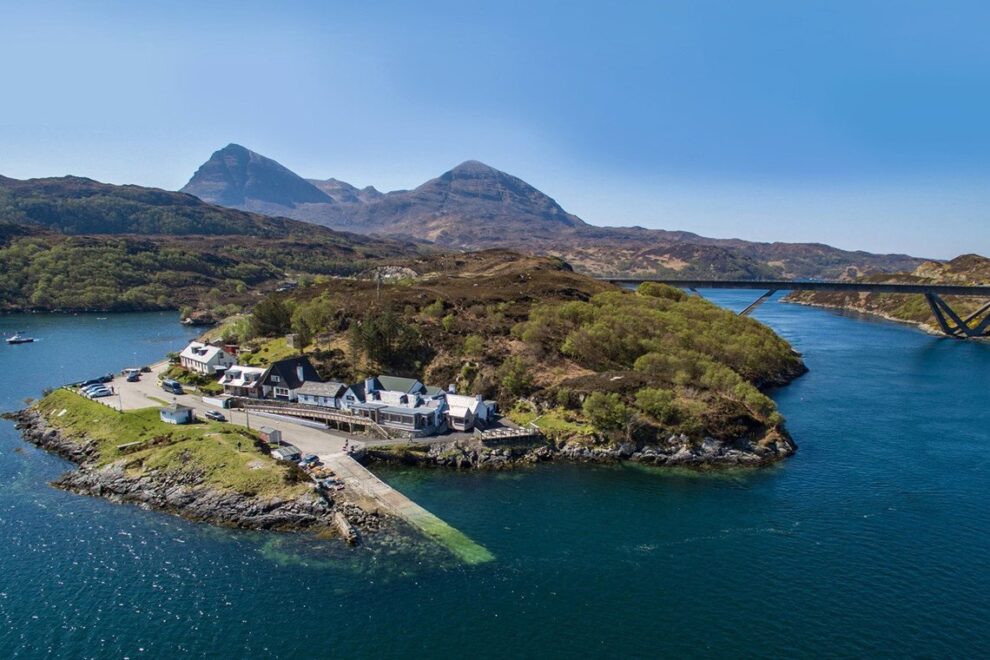
The image is exceptionally well-composed, capturing the historic Tongue Hotel from an appealing elevated angle that highlights both the architecture and the scenic surroundings. The lighting is superb, utilizing natural daylight to create depth and warmth. The image is very sharp, with crisp details on the building's facade and textures. Colors are accurate, natural, and vibrant, especially the contrast between the stone, the sky, and the greenery. There are no unwanted elements present; the scene is clean and professionally presented.

Image / www.highlandcoasthotels.com

Tongue Hotel

You arrive to honest Highland light and a simple welcome. Stay with Highland Coast Hotels and you are moments from Ben Loyal, the Kyle of Tongue and quiet beaches where seals haul out. Spend mornings walking the Tongue headland, afternoons fishing from rocky bays, or take the short drive to Durness for Smoo Cave and wide sands. Wildlife is around every corner, from golden eagles to otters at the estuaries. The hotels are your base for days filled with fresh air, local seafood and easy pace. Come to explore, then return to small, thoughtful rooms and hearty food that feels like home.


The image is an excellently composed aerial photograph of a coastal landscape. It is well-lit, providing natural and pleasing colors that capture the atmosphere effectively. The image is very sharp throughout, maintaining clear details across the terrain and water. It appears highly realistic and accurately represents the scale of the scene. The composition leads the eye along the road and coastline, which are the primary focus points. No unwanted elements are present.

Image / www.highlandcoasthotels.com

When did the Kyle of Tongue causeway open, and how big is the crossing?

The Kyle of Tongue causeway and bridge opened in 1971. It carries the A838 across the sea loch on a 3.8 km roadway with a 183 m bridge at the west end. From Tongue Hotel, it is the quickest way to head for Durness or loop east towards Bettyhill.

This is a well-composed landscape photograph that effectively uses the rule of thirds. It is well-lit with soft, natural golden hour lighting that enhances the depth and mood of the scene. The image is sharp with good detail across the foreground and background, and the colors are accurate and natural. It is highly photo-realistic and captures the atmosphere of the Scottish-style highlands beautifully. There are no unwanted elements such as watermarks or cluttered artifacts. The ruin on the hill acts as a clear focal point.

Image / www.highlandcoasthotels.com

What is the ruin on the hill above the Kyle of Tongue?

Castle Varrich stands on a rocky outcrop overlooking the Kyle, and nobody is entirely sure how old it is. Some believe it dates back over a thousand years to a Norse fort mentioned in the Orkneyinga Saga. Others link it to the Mackays, who used it as their clan seat before moving to Tongue House in the 1500s. The walls are five feet thick, built from squared sandstone without mortar, and have barely weathered. A footpath from Tongue village leads to the ruin in about half an hour, with a steel staircase inside giving views across to Ben Loyal and Ben Hope.

The image features a well-composed landscape with a clear foreground, mid-ground, and background, creating good depth. The lighting is soft and natural, appropriate for a cloudy day. It is sharp with good color accuracy and realistic representation of the environment. There are no unwanted elements present. Strengths include excellent composition and natural color tones. Weaknesses include a slight lack of extreme detail in the distance and the sky being slightly overexposed.

Image / www.highlandcoasthotels.com

Why is Ben Loyal called the Queen of Scottish Mountains?

Ben Loyal rises to 764 metres directly south of the Kyle of Tongue and is known as the Queen of Scottish Mountains for the distinctive crown of granite peaks along its summit ridge. Despite being lower than a Munro, it is considered one of the finest hills in Scotland for the quality of its views, taking in the north coast, the Orkney Islands and the vast peatlands of the Flow Country. The mountain is made from a rare rock called syenite, which gives it a character quite different from the sandstone and gneiss peaks further west along the NC500.

Image / www.highlandcoasthotels.com

Inspired by this guide?

Turn inspiration into a Highland adventure with help from our Reservations Team. Whether you'd like to stay at one hotel or create a multi-stop journey across the North Highlands, our team can recommend accommodation, attractions and experiences to suit your interests, travel style and budget. From NC500 road trips and golf breaks to wildlife encounters and coastal escapes, we're here to help you make the most of your time in the Highlands. Get in touch today or give us a call to start planning your trip.