



The Tapestry Room at Lochardil House
The Hidden History of the Tapestry Room at Lochardil House, Inverness
Step inside the Tapestry Room at Lochardil House in Inverness and you will find one of the hotel’s most unusual historic features.
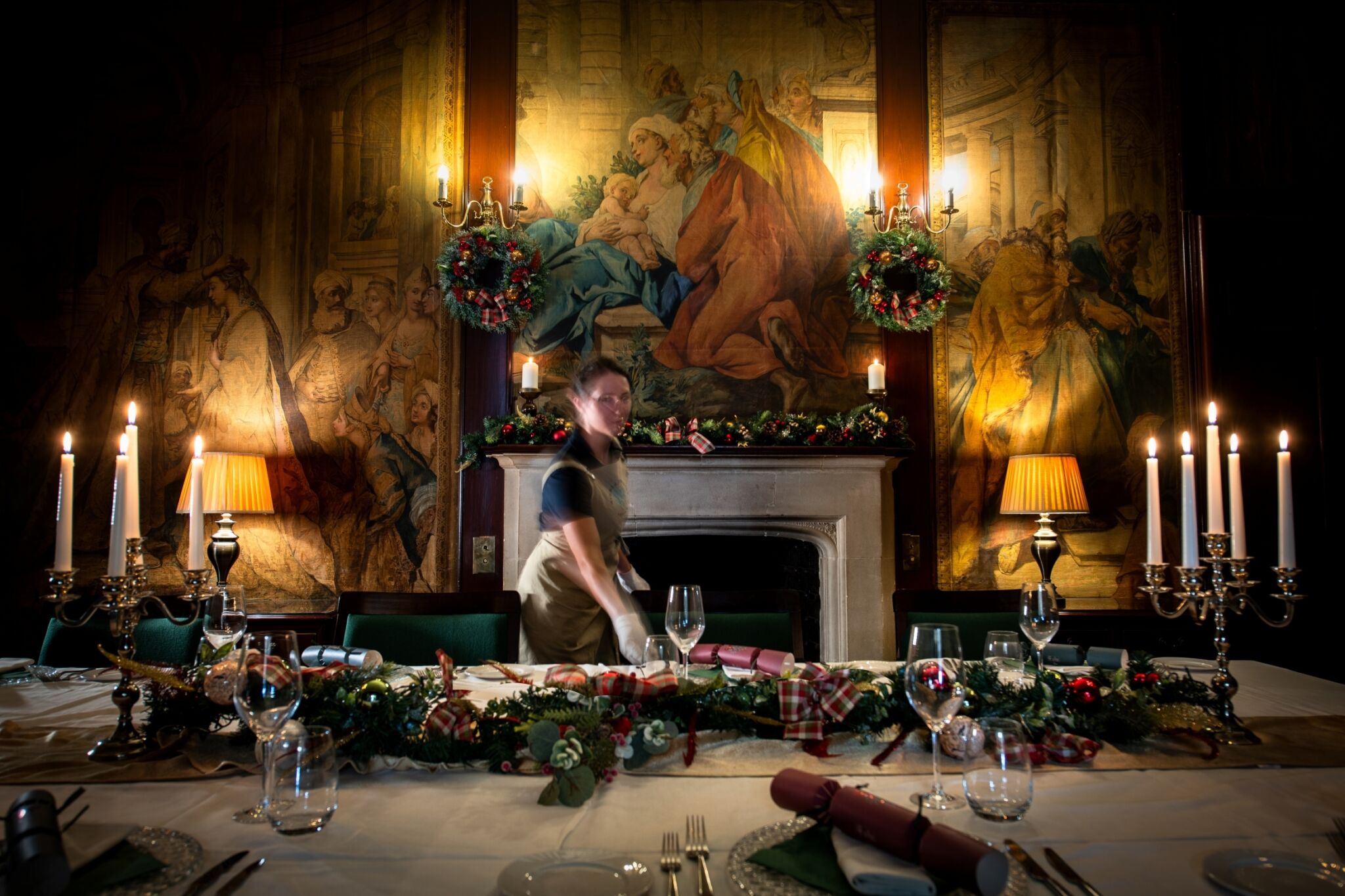
The walls are covered with large painted cloth panels depicting The Story of Esther, a story from the Old Testament. These remarkable works have been part of Lochardil House for around a century, but their history began elsewhere in the Scottish Highlands.
The Tapestries of Lochardil House
The paintings in the Tapestry Room are copies of the famous Gobelins tapestries depicting the History of Esther.
The original tapestry series was designed by the French artist Jean-François de Troy in the 18th century. Sets were woven at the renowned Gobelins Manufactory in Paris.
A set of the original tapestries is part of the Royal Collection and can be found at Windsor Castle.
Lochardil House has its own connection to this remarkable artistic story.
Historic Environment Scotland records that the painted tapestries now displayed at Lochardil were formerly at Castle Rosque in Ross-shire. They were later cut to fit their new home in what is now the Tapestry Room. Historic Environment Scotland
From Ross-shire to Inverness
The paintings are believed to have arrived at Lochardil House during the early 20th century.
Today, they cover the walls of the Tapestry Room, creating one of the most distinctive interiors in the house.
Their previous home is recorded as Castle Rosque, also associated with Loch Rosque in Ross-shire, near Achnasheen in the Northwest Highlands. Historical records show Loch Rosque as one of the notable Highland estates and residences of Ross-shire. Vision of Britain
Exactly how the paintings travelled from Castle Rosque to Lochardil House remains part of their story still to be uncovered.
What Do the Paintings Show?
The paintings tell The Story of Esther.
The story centres on Esther, who becomes Queen to King Ahasuerus, and her cousin and guardian Mordecai.
When Haman, a senior figure in the King's court, plots against the Jewish people, Esther risks her own life by approaching the King and revealing what is happening.
Her intervention saves her people, while Mordecai is eventually honoured by the King.
The story has inspired artists for centuries and became the subject of the grand French tapestry series on which the Lochardil paintings are based.
A Historic Room in Inverness
The paintings are not the only history found at Lochardil House.
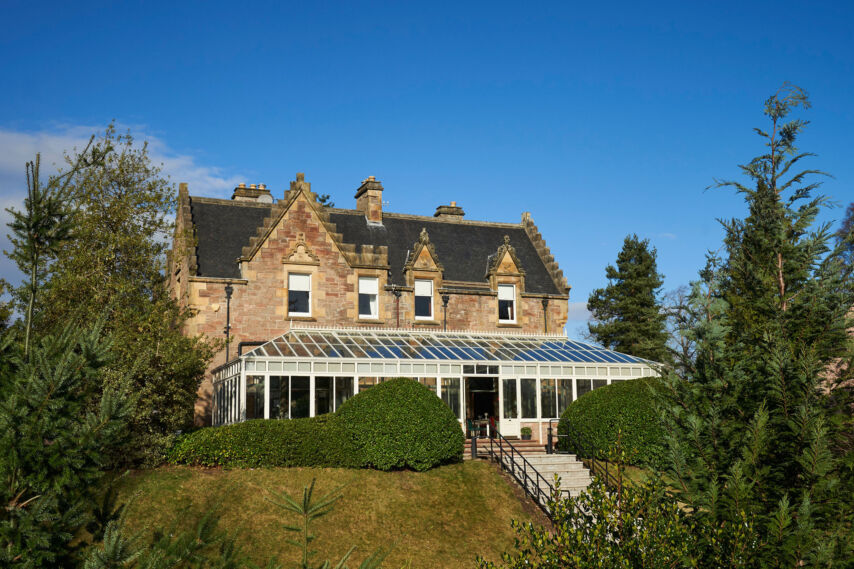
The original house was designed by Inverness architect John Rhind and built between 1876 and 1878. Today, Lochardil House is a Category B listed building, recognised for its architectural and historic interest. Historic Environment Scotland
Historic Environment Scotland specifically highlights its impressive interior, including its staircase and the painted tapestries in the dining room.
More than a century after the paintings arrived here, the Tapestry Room remains part of everyday life at Lochardil House.
Guests can still dine and celebrate surrounded by these extraordinary scenes, just as generations of visitors have done before them.
Discover Lochardil House in Inverness
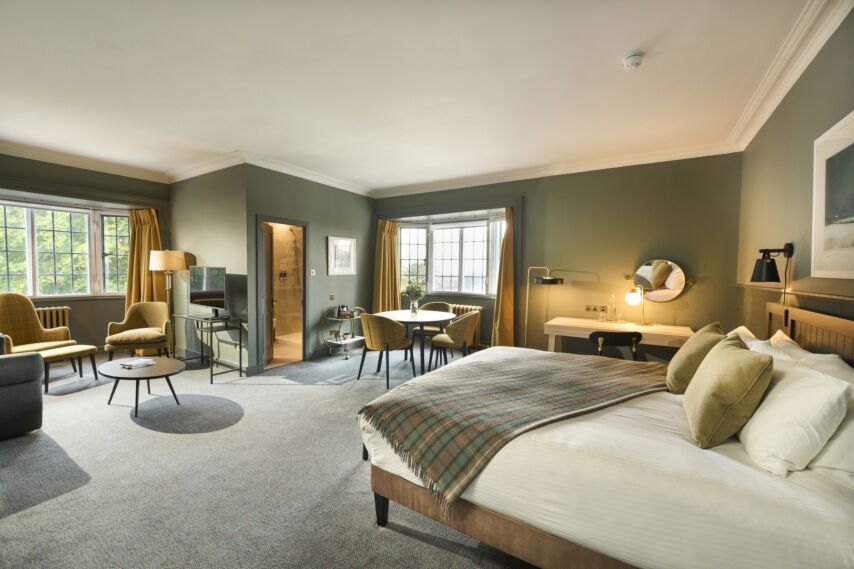
Located in a peaceful setting in Inverness, Lochardil House combines the character of a historic Highland house with a modern hotel experience.
The Tapestry Room is one small part of that story.
Next time you visit, take a closer look at the walls. What may first appear to be traditional wallpaper or tapestries is something much more unusual: painted works of art with a journey through Highland history that stretches back generations.
And there may still be more of their story waiting to be discovered.
Sources
Sources & further reading
The history in this article has been informed by the following heritage and museum sources:
- Historic Environment Scotland – Lochardil Hotel, Stratherrick Road (Listed Building LB35356). The official listing records Lochardil House as a John Rhind building dating from 1876–78 and specifically describes the dining-room walls as painted copies of the Gobelins History of Esther tapestries, formerly at Castle Rosque and cut to fit their present location. Historic Environment Scotland
View the Historic Environment Scotland listing - Royal Collection Trust – The History of Esther, Windsor Castle. The Royal Collection holds seven Gobelins panels depicting the Story of Esther. They were produced after designs by Jean-François de Troy, with sets of the series woven between 1738 and 1794. The Windsor set was completed by 1789 and acquired for George IV in Paris in 1825. Royal Collection Trust
Explore the Esther tapestries in the Royal Collection - The Louvre – Jean-François de Troy and the History of Esther. The Louvre holds original paintings created by de Troy for the History of Esther tapestry series, including La Toilette d’Esther (1738), which was specifically intended to be reproduced as a Gobelins tapestry. Louvre Collections
View the Louvre collection record